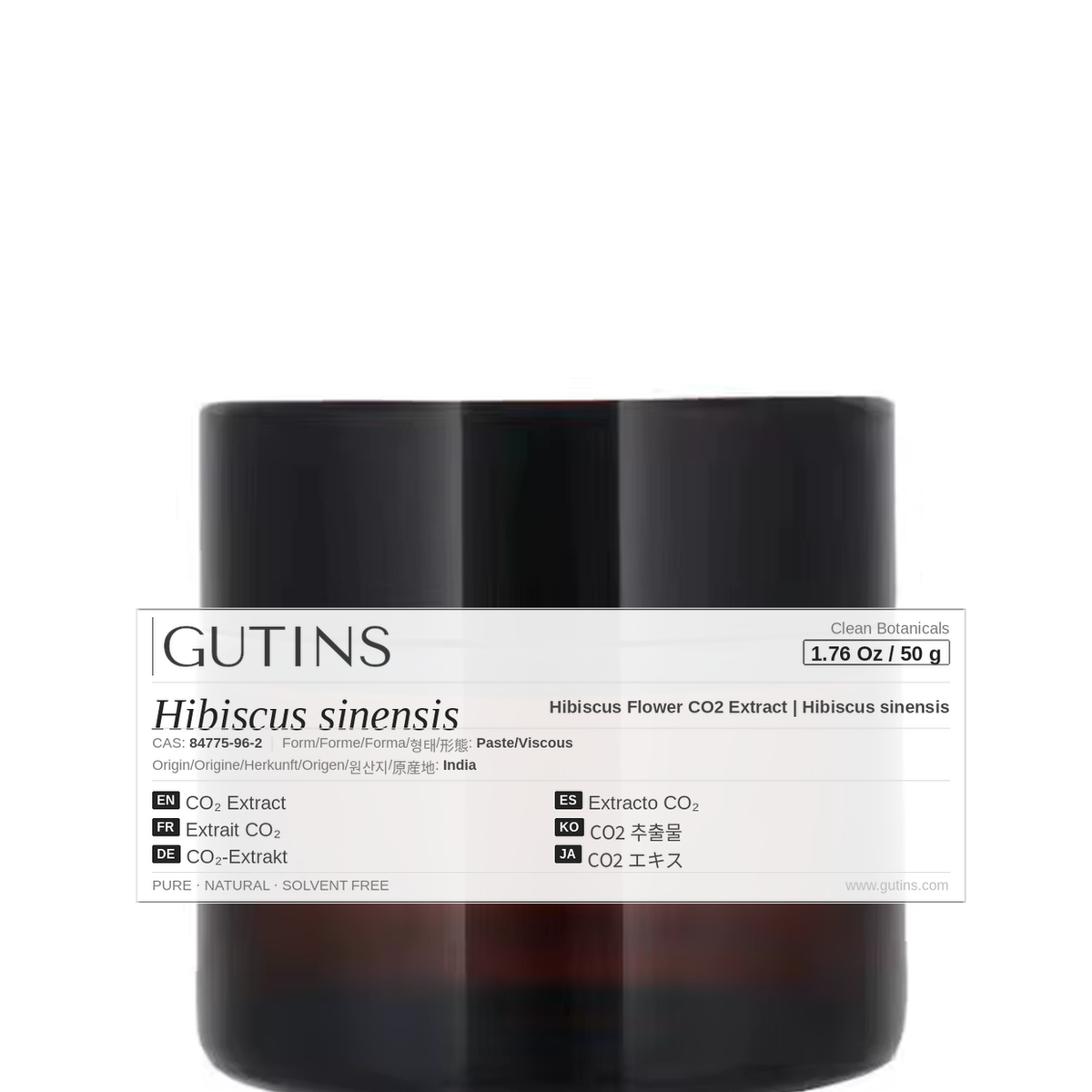
Hibiscus Flower CO2 Extract | Hibiscus sinensis
Hibiscus Flower CO2 Extract | Hibiscus sinensis
Couldn't load pickup availability
Hibiscus Flower (Hibiscus sinensis) CO2 Extract
| Common Name | Hibiscus Flower, Gudhal Flower, Hibiscus sinensis,Chinese hibiscus, Jaswand |
| Botanical Name | Hibiscus sinensis |
| INCI Name | Hibiscus sinensis Flower Extract |
| CAS Number | 84775-96-2 |
| Product | Hibiscus Flower (Hibiscus sinensis) CO2 Extract |
| Part Used | Flower |
| Extraction Method | Supercritical CO2 (SCO2) |
| Form Available | Paste/Viscous |
| Oil/Fat Soluble | Yes |
| Water Solubility | No |
| Alcohol (Ethanol) Soluble | Partial |
| Active Contents (Phytochemical) | flavonoids (such as quercetin and kaempferol), anthocyanins (such as cyanidin and delphinidin), tannins, saponins, phenolic acids (like caffeic acid and chlorogenic acid), mucilage, and ascorbic acid (vitamin C). |
| Country of Origin | India |
| Vegetarian | Yes |
| Storage | Store in a cool and dry place |
About Hibiscus Flower CO2 Extract
CO₂ extraction uses pressurized carbon dioxide at low temperatures to extract active compounds from Hibiscus sinensis (Hibiscus Flower) without chemical solvents. The key advantages are no solvent residue, better preservation of heat-sensitive compounds, high purity, and a true-to-plant profile, making it ideal for premium, clean-label food, nutraceutical, and cosmetic applications.
Frequently Asked Questions
1. What makes Hibiscus Flower CO2 Extract superior to solvent-extracted Hibiscus Flower?
Hibiscus Flower CO2 Extract (Hibiscus sinensis) is obtained using supercritical carbon dioxide, which means zero solvent residues remain in the final product. Unlike hexane or ethanol extractions, CO2 extraction preserves the delicate bioactive profile of Hibiscus Flower in its most authentic form — resulting in an extract that is cleaner, purer, and truly representative of the original plant material.
2. How does Hibiscus Flower CO2 Extract retain its original aroma and flavour?
Supercritical CO2 operates at low temperatures and controlled pressure, which prevents thermal degradation of volatile and heat-sensitive compounds in Hibiscus Flower. This means the extract retains the true-to-nature aroma, flavour, and colour profile of the original hibiscus flower plant material — something conventional distillation or solvent extraction often fails to achieve.
3. Why is a smaller dose of Hibiscus Flower CO2 Extract more effective?
CO2 extraction yields a highly concentrated form of Hibiscus Flower, including its key active constituents (flavonoids (such as quercetin and kaempferol), anthocyanins (such as cyanidin and delphinidin), tannins, saponins, phenolic acids (like caffeic acid and chlorogenic acid), mucilage, and ascorbic acid (vitamin C).), because it selectively extracts the most desirable compounds with exceptional efficiency. This means you need significantly less quantity compared to conventional extracts to achieve the same or better results, making it cost-effective despite its premium positioning.
4. What are the different ways Hibiscus Flower CO2 Extract can be used?
Hibiscus Flower CO2 Extract is versatile and finds applications across multiple industries. In cosmetics and personal care, it is used in serums, creams, and formulations for its potent bioactives. In the food and nutraceutical industry, it serves as a natural flavouring and functional ingredient. It is also used in aromatherapy, pharmaceutical preparations, and as a premium ingredient in Ayurvedic and herbal formulations.
5. What makes Hibiscus Flower CO2 Extract a premium-grade ingredient?
The premium nature of Hibiscus Flower CO2 Extract comes from the advanced supercritical extraction technology, the absence of any chemical solvent, and the resulting unmatched purity and potency. It is solvent-free, rich in natural phytochemicals, and offers a concentration ratio that delivers superior performance in every application — from skincare formulations to flavour compounds and wellness products.